My mini-movement: “Which Human?”

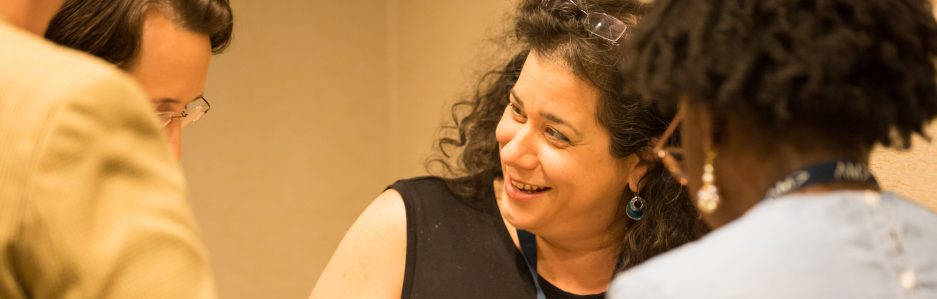
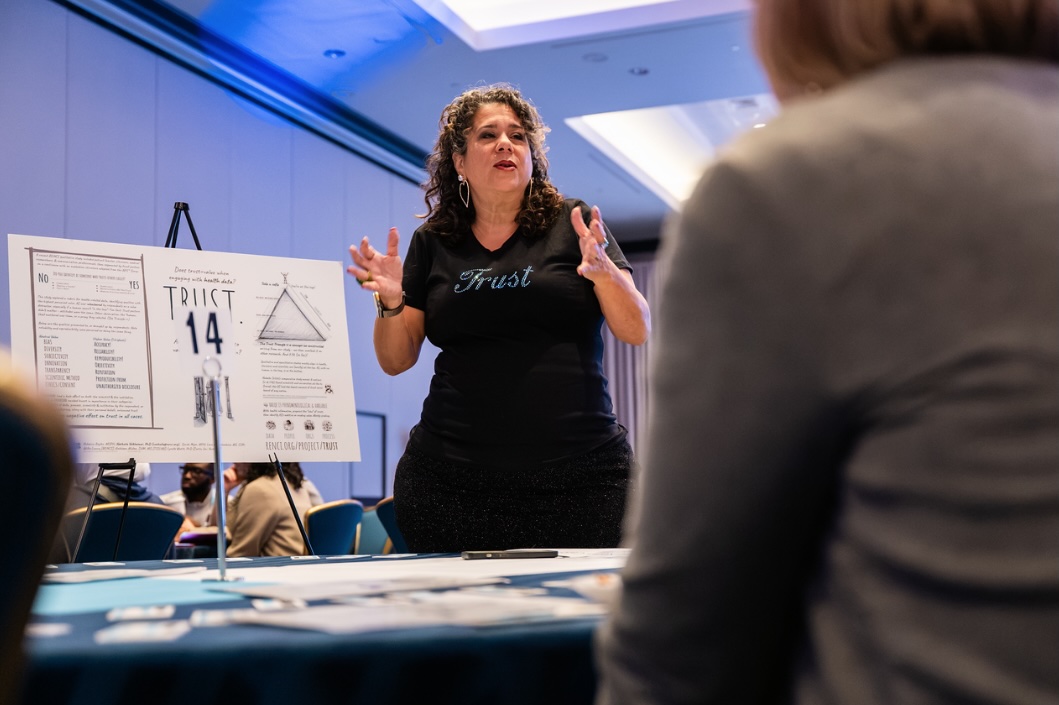
Discussing trust, health data and AI at AI x PH in Baltimore

After attending AIxPH in Baltimore, and relentlessly promoting the concept of trust and how it works in consumer environments in a current project. The crowd was largely (unsurprisingly) PH (public health) and vendors selling their AI wares.

What I heard a lot of is “people trust a human in the loop”.

There was no evidence to back this up, and nor was there evidence that one human is as good as another.

Projects in flight didn’t differentiate either. I quizzed vendors and consultants on their processes to engender trust. They just copied and pasted from existing ethics and governance. The belief was that trust transfers over to technologically advanced systems. Errors in current processes weren’t fixed; new problems weren’t addressed; opportunities for improvement were considered incremental at best. Very little was evidence-based learning. nothing I saw was built on current literature in psychology, anthropology, consumer behavior, or health promotion. Or, oddly, public health.

So, I am starting a movement.

We are going to hear “AI with human in the loop” A LOT. Mainly because no one trusts AI unless they “let them in” to their process. The humans using AI trust the AI they have chosen to us, not the AI thrust upon them. Anyone who knows anything about consumer behaviour and customer experience would say “no surprises there”.

So, every time someone says “Human in the loop…” in reference to AI, respond with…

WHICH HUMAN.

It’s a simple questions, and one the hucksters and vendors, and influencers hadn’t thought of.

Trust Me. But don’t trust me. But trust me.

Presenting at the UNC Chapel Hill Data Science Day

On September 23, 2025 I was fortunate to be chosen to present for 10 minutes on the above topic. I pitched it for two reasons:

1. Trust is part of every relationship experience we have, whether it is driving it or in the back seat (or the trunk).
2. Trust, and how it is signaled and managed is a huge part of the work I am currently undertaking on various projects, specifically relating to the user (customer) experience with big data, research and artificial intelligence.

AI has trust issues. So does research. So does working with big data. All are well-earned trust issues. That is, they deserve the rep they have. But they aren’t going away, and the million – billions – to be made in the field isn’t going away either. So how do we manage consumer trust?

The same way we do it with humans. First thing: determine if trust is part of the relationship at all.

If you’re interested in finding out more, and how trust can increase your consumer affinity and word of moth marketing, reach out.

Developing an AI Chatbot for really smart people

I am currently working on a project developing an AI Chatbot for “really smart people” – medical researchers. This audience is intellectually rich and time poor. An extra layer sitting on top of this complex customer experience setting are the various regulations (and absence of regulations) around the use of Artificial Intelligence in science, health, government, and knowledge generation. One of the greatest issues with AI is trust. Lucky I have so much experience with customer trust in both my professional and academic life! I feel very comfortable talking about trust, or the lack thereof, in AI.

One of the most resonant part of the presentation I recently gave is that the key phrase with AI is commonly : “Trust but verify”.

Simply put this means, with AI: do not trust.

How can we make AI more trustworthy? is the questions a lot of scientists are asking. This presentation that I recently gave at an APRA-H asks (and answers) a more nuanced question: considering the current environment, how can we enable the customer to know when they can trust us?

Screenshot

I will be presenting at ANZMAC 2009 in Melbourne, Victoria

I will be presenting two papers at the Australia and New Zealand Marketing Academy Conference 2009 in Melbourne, Victoria. The papers I’ll present are called “Operationalising Consumer Co-Creation: Marketing as an Infinite Game” and “Customer Evangelism: A Conceptual Model”.

Once the paper final versions are accepted they will be uploaded on to the site. After the presentation the slide show will be uploaded to the site.

I will be presenting at the “Locally Grown” Research Round Table on October 1st in Bunbury, Western Australia

I will be presenting a 20 minute talk on her conceptual paper “Marketing as an Infinite Game” at the Locally Grown Research Conference, ECU South West, Bunbury. The conference is by invitation only, however members of the public can request an invitation from the Centre for Regional Sustainable Futures.

Once the presentation has finished, I will present the notes and slides from the presentation along with comments and discussion from the participants in the “Published + Presented Works” Section.