My mini-movement: “Which Human?”

Discussing trust, health data and AI at AI x PH in Baltimore

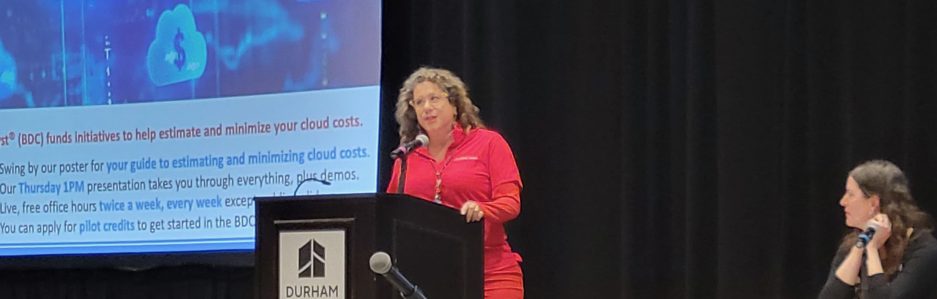
After attending AIxPH in Baltimore, and relentlessly promoting the concept of trust and how it works in consumer environments in a current project. The crowd was largely (unsurprisingly) PH (public health) and vendors selling their AI wares.

What I heard a lot of is “people trust a human in the loop”.

There was no evidence to back this up, and nor was there evidence that one human is as good as another.

Projects in flight didn’t differentiate either. I quizzed vendors and consultants on their processes to engender trust. They just copied and pasted from existing ethics and governance. The belief was that trust transfers over to technologically advanced systems. Errors in current processes weren’t fixed; new problems weren’t addressed; opportunities for improvement were considered incremental at best. Very little was evidence-based learning. nothing I saw was built on current literature in psychology, anthropology, consumer behavior, or health promotion. Or, oddly, public health.

So, I am starting a movement.

We are going to hear “AI with human in the loop” A LOT. Mainly because no one trusts AI unless they “let them in” to their process. The humans using AI trust the AI they have chosen to us, not the AI thrust upon them. Anyone who knows anything about consumer behaviour and customer experience would say “no surprises there”.

So, every time someone says “Human in the loop…” in reference to AI, respond with…

WHICH HUMAN.

It’s a simple questions, and one the hucksters and vendors, and influencers hadn’t thought of.

Trust Me. But don’t trust me. But trust me.

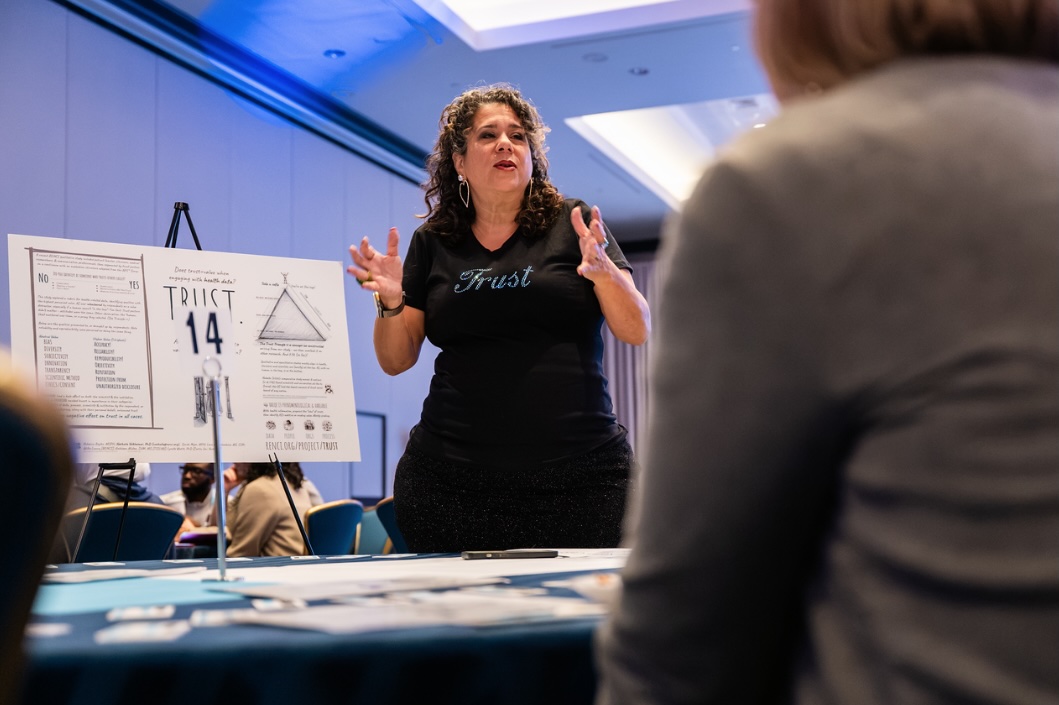
Presenting at the UNC Chapel Hill Data Science Day

On September 23, 2025 I was fortunate to be chosen to present for 10 minutes on the above topic. I pitched it for two reasons:

1. Trust is part of every relationship experience we have, whether it is driving it or in the back seat (or the trunk).
2. Trust, and how it is signaled and managed is a huge part of the work I am currently undertaking on various projects, specifically relating to the user (customer) experience with big data, research and artificial intelligence.

AI has trust issues. So does research. So does working with big data. All are well-earned trust issues. That is, they deserve the rep they have. But they aren’t going away, and the million – billions – to be made in the field isn’t going away either. So how do we manage consumer trust?

The same way we do it with humans. First thing: determine if trust is part of the relationship at all.

If you’re interested in finding out more, and how trust can increase your consumer affinity and word of moth marketing, reach out.

Developing an AI Chatbot for really smart people

I am currently working on a project developing an AI Chatbot for “really smart people” – medical researchers. This audience is intellectually rich and time poor. An extra layer sitting on top of this complex customer experience setting are the various regulations (and absence of regulations) around the use of Artificial Intelligence in science, health, government, and knowledge generation. One of the greatest issues with AI is trust. Lucky I have so much experience with customer trust in both my professional and academic life! I feel very comfortable talking about trust, or the lack thereof, in AI.

One of the most resonant part of the presentation I recently gave is that the key phrase with AI is commonly : “Trust but verify”.

Simply put this means, with AI: do not trust.

How can we make AI more trustworthy? is the questions a lot of scientists are asking. This presentation that I recently gave at an APRA-H asks (and answers) a more nuanced question: considering the current environment, how can we enable the customer to know when they can trust us?

Screenshot

2030: End of the cheque era in Australia

This week, the Australian Federal Reserve indicated that cheques will not longer be accepted as a form of payment after 2030 in Australia. Australia joins New Zealand, Poland and other, smaller, Western nations in this move, which will create more efficiencies for banks, but also sideline a minority of – mostly older – Australians. In an interview with ABC Drive Brisbane, I discuss this development and what it means for the few consumers who still use cheques.

Cash, Credit and Tipping with ABC Brisbane Drive

I have been lucky enough to have a lengthy (by radio standards) interview on the Australian ABC Brisbane about both the state of consumer transactions (cash vs credit vs digital wallets vs buy-now-pay-later vs debit) and tipping in Australia.

The upshot is that how we pay influences how much we pay. Pay with cash? You’re less likely to spend as much or tip as much. Use a digital wallet? You’re more likely to be buying on the fly, using your mobile.

Have a listen to them below!

Should we be worried about Big Tech layoffs? Not really.

I recently worked with two of my favorite co-authors on an article about recent Big Tech layoffs which could easily get to 100,000 by mid year.

There are many lessons to be learned in how they got laid off. From the creative and horrifying Musk method to other devastating approaches. Though these are largely privileged workers, and they are likely to be employed quickly, they fuel the fire of worker’s rights and the anger in the workforce about irresponsible management.

Senior leaders of Big Tech wantonly expanded their workforce for a future they knew wasn’t coming. They didn’t give people enough warning to ethically slim down their workforce. They used people up and threw them out just like the mining, consulting, finance industries to name a few.

So when people cry out for unions, for more protections, for more job security and for an understanding that employment relationships end but they should be fair form beginning to end, this kind of behaviour is why.

…what about my Alexa?

As Amazon undergoes a hiring correction now that they realised COVID won’t go on forever, they are also taking the opportunity to divest themselves of the expensive development of the Alexa product. Alexa, a Jeff Bezos favorite child for a decade, is now gutted. And yet this product lives, and listens, in millions of homes around the world. In an article published today, a couple of colleagues and mine and I posit what your future will be like with your roommate, Alexa.

Media appearance: Psychological Safety in Retail

I was please to be quoted in a recent WAtoday article focusing on customer aggro in retail. Tempers get short, and people have bad days…we can’t always be at our best. It is incumbent on frontline workers to look out for each other and managers to protect staff. Retail management are legally and ethically required to provide psychological safety to their workers. And it is one of the greatest tool managers have in retaining staff.

Meaningful, authentic and earned

I recently completed (over) forty hours of training with The Trevor Project. It was tougher than I had considered, and more meaningful than I thought it would be. Are those two things related? Maybe.

The training itself was comprehensive. it was online and asynchronous but tracked, monitored and had staged just like a curriculum course. As we work with vulnerable populations, there were the usual checks, but also group and one on one coaching. Role plays were involved until they were confident in your skills. When I realised I’d graduated and wasn’t aren’t “practicing” anymore the tasks became more daunting.

I’m not sure I am a great person for doing this – though congratulations abound. I am, however, changed by the young people I encounter. Their voices: of who they are and how that is denied by the people closest to them, resonate long after I am done with my volunteering for the day.

When the gold medal isn’t good enough

The Rural, Regional and Remote Women’s Network hosts development opportunities for women around Australia.

I was recently invited by ECU’s South West Campus to speak at an event for Regional, Rural and Remote women. ECU South West is where I started my ECU career almost 20 years ago. I have an attachment to that location as it hosted so much of my own development. Last week, I delivered a talk on Imposter Syndrome, which is defined as having material evidence that you are doing well and yet refusing to believe it, then developing anxiety around other people being able to discover it and anticipating the shame that would follow.

The research I conducted regarding Imposter Syndrome in order to prepare for this presentation had a few surprising facts, the chief of which is that men suffer from it as much as women do. The perception is that it holds women back more; but that is unsubstantiated. This 15 minute presentation is short, sharp and a great salve for an ache where your confidence used to be. To schedule one for your organisation, contact me.